Inspections that lead to learning
An audit can be a useful, respectful way to compare agreed scope with what people observe in the building.
Use the checklist library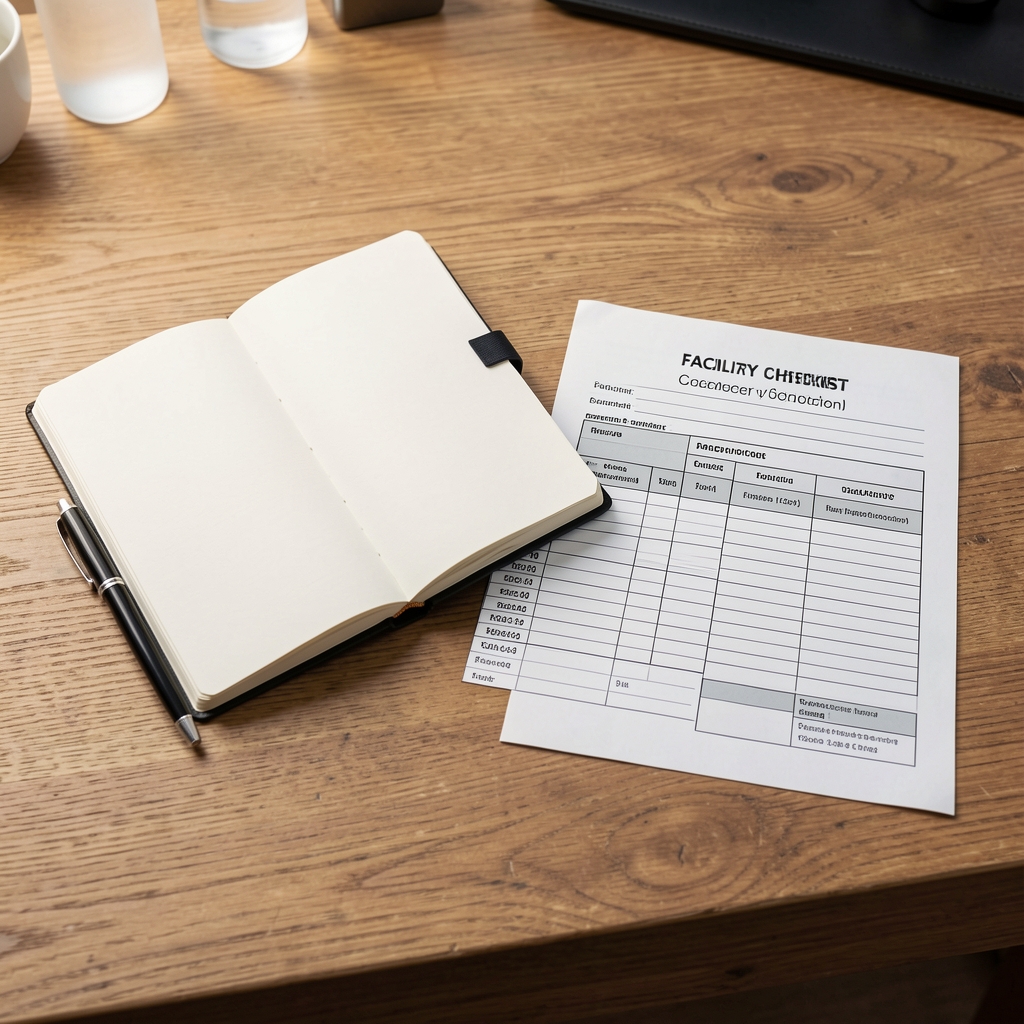
A balanced inspection record
An inspection is only as helpful as the record it leaves behind. A short, consistent note format lets a facility team compare one visit with the next, notice patterns over several weeks and avoid relying on memory. The table below lists the fields that most records contain, together with the reason each one earns its place on the form.
| Record | Why it matters | Practical example |
|---|---|---|
| Location and time | Conditions change with use and shift patterns. | “Second-floor kitchenette, Tuesday, 07:40, before the first meeting block.” |
| Observation | Specific notes are easier to verify than general impressions. | “Residue along the lower edge of the counter; bin liner not replaced.” |
| Agreed next step | Ownership turns feedback into action. | “Evening team to add the counter edge to the weekly detail list.” |
| Review date | Follow-up stops open items from disappearing. | “Check again at the next Thursday walk-through.” |
| Contributors | Shows who was consulted and who can clarify later. | “Observed with the floor coordinator and a tenant representative.” |
| Reference to scope | Links the finding to what was actually agreed. | “Scope item 4.2: kitchenette surfaces, daily.” |
Records do not need to be long. Most teams find that three or four lines per observation are enough, provided the wording is concrete. The aim is a document that a colleague who was not present can still understand a month later.

Ask before you judge
Context matters. A missed task may reflect access, a late room change, missing supplies or an unclear scope. Good inspection practice records the condition and invites the relevant people into the response.
In practice, this means that the person carrying out the inspection spends a few minutes asking neutral questions before writing a conclusion. Was the room in use earlier than planned? Was a key unavailable? Did the task list change recently? The answers often reveal that the cause sits in coordination rather than effort.
- Describe the condition first, in words a neutral reader would recognise.
- Ask the people closest to the work for their view of the cause.
- Separate what was seen from what is assumed.
- Agree one next step and name the person who will take it.
How an inspection usually unfolds
Inspection routines differ between a small office and a multi-building campus, but the sequence of activity is surprisingly stable. The five steps below describe a typical cycle and the short written output that each one produces.
1. Prepare
Review the written scope, recent feedback and any changes to room use. Decide which areas will be visited and bring a copy of the record format.
2. Walk
Visit the agreed areas at a time when they are normally in use. Note conditions, access issues, storage and anything that affects the work.
3. Discuss
Share the observations with the people responsible for the area. Listen for causes, constraints and local knowledge before drawing conclusions.
4. Record
Write down the findings, the agreed next steps and the review date. Keep the language factual and free of blame.
5. Follow up
Return to open items on the stated date, confirm what changed and update the scope if the same point keeps recurring.
The shape of a useful inspection
These figures describe the structure of the method explained on this page. They are not measurements of any particular building and are offered only to make the sequence easy to remember.
Choosing what to inspect
Few teams have time to look at everything every week. A sensible inspection plan therefore rotates attention between areas, with more frequent visits where use is heavy and fewer where conditions change slowly. The two lists below separate the factors that usually increase visit frequency from those that allow a longer interval.
Reasons to look more often
- High numbers of people passing through each day.
- Shared kitchens, washrooms and break areas.
- Recent complaints or repeated questions from occupants.
- New equipment, new materials or a recent change of team.
- Areas where safe movement depends on a dry, clear floor.
Reasons a longer interval can work
- Rooms used occasionally and left undisturbed between uses.
- Stable records over several consecutive reviews.
- Surfaces with simple finishes and low soiling.
- Clear ownership and a team familiar with the space.
- Storage areas that are monitored through another routine.
Whichever interval is chosen, write the reasoning into the plan. A short sentence such as “visited monthly because use is occasional and the last four reviews showed no open items” makes later changes easier to explain to colleagues, tenants and suppliers.
“An inspection should leave a room easier to understand than it was before the visit. If the only outcome is a list of faults, the useful part of the conversation has been missed.”
Reading note: The method described here is general. Buildings in Germany may be subject to specific occupational safety, hygiene and contractual requirements. Check the applicable instructions for your site and consult a qualified specialist where a situation calls for it.
Common questions about audits
Is an audit the same as an inspection?
The words are often used interchangeably, but many organisations reserve “audit” for a more formal review against a written standard, sometimes carried out by someone outside the day-to-day team. An “inspection” is usually a shorter walk-through using a simple record. Both benefit from the same habits: specific notes, named owners and a review date.
Who should carry out the inspection?
Either a supervisor, a colleague from another area or a representative of the building operator can do so. What matters is that the person understands the written scope and is willing to hear the explanation from the people doing the work.
How should disagreements about findings be handled?
Return to the scope document and the dated notes. If the document is unclear, record that as the finding and agree who will clarify it. Disagreement is often a sign that the wording of the scope needs improvement.
Keeping the record in view
Records are most useful when they are visible. A notice board near the staff entrance, a shared digital folder or a laminated summary in the supply room can all help. Whatever the format, show the current version date and the name of the person who maintains it.
Teams that review records together once a quarter often find that the discussion changes tone. Instead of reacting to single events, participants talk about patterns, workloads and the clarity of the plan itself. That wider conversation is where inspection moves from checking to learning.
Read about standards and evidence →
Questions about inspection practice?
The editorial desk is happy to receive topic suggestions and anonymised examples. Write to Danziger Straße 5, 10435 Berlin, or call +49 30 5892 7314 during office hours.
Contact the editorial desk